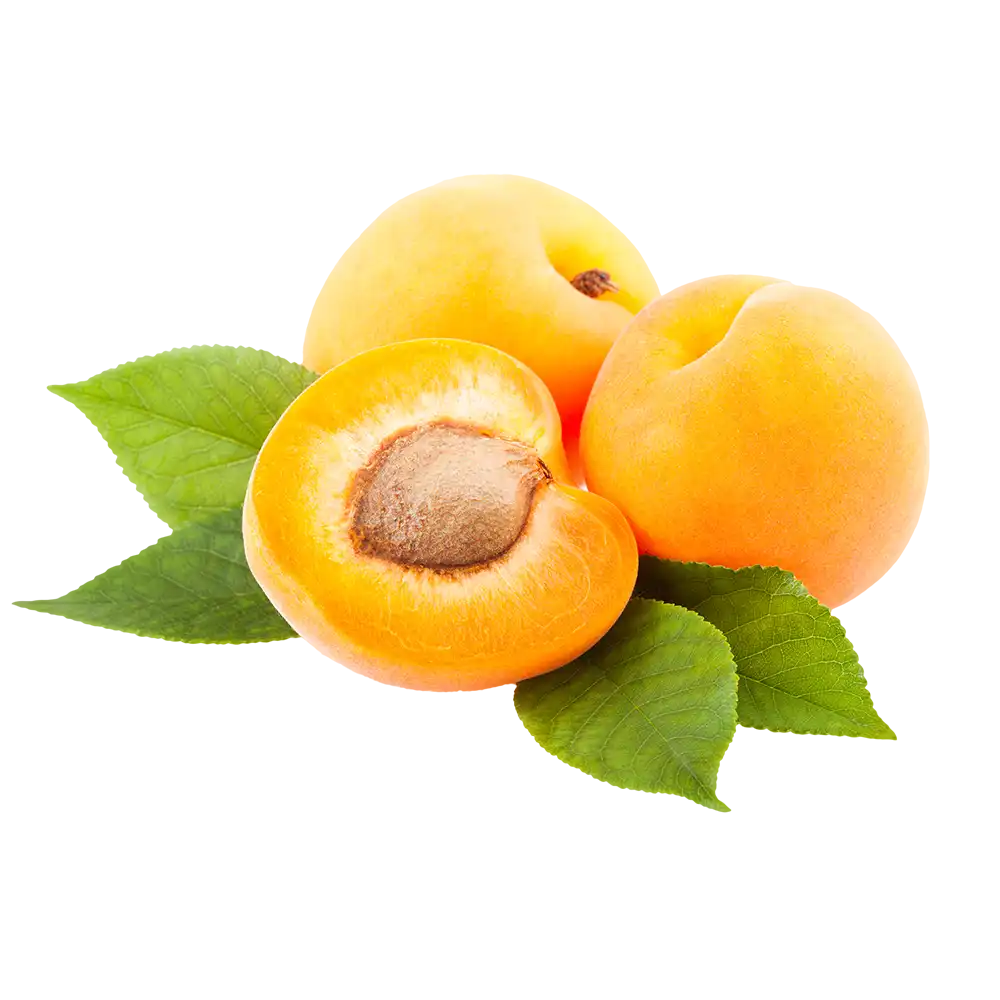
Apricots were first cultivated almost 4,000 years ago in China, from where they then took the Silk Road, spreading to Central Asia and the Middle East, and later to the Mediterranean area and beyond. Turkey and Iran are currently the largest apricot growers worldwide.
They are rich in vitamin A, beta-carotene and other carotenoids (those pigments that give color to tomatoes, carrots, green leaves, fruits, but also flowers), as well as numerous antioxidants such as chlorogenic acids, catechins and quercetin (all three are flavonoids useful in neutralizing the effects of free radicals).
Apricots are considered the ally of healthy vision, thanks to lutein, and the seeds contain amygdalin, a vitamin that has proven antitumor, anti-inflammatory, analgesic and immunomodulatory effects.
Nutritional values per 100g / Percent RDA
(daily reference dose)*
Energy (kcal):
0
Fats (g/1%):
0
Carbohydrates (g/4%):
0
Proteins (g/3%):
0
Dietary fiber (g/6%):
0
Vitamin C (mg/11%):
0
Vitamin E (mcg/6%):
0
Copper (mg/9%):
0
Calcium (mg/1%):
0
Vitamin A (mcg/11%):
0
Potassium (mg/6%):
0
ORAC score**/100 g: 1110
Top benefits
The most important benefit of apricots is related to eye health: apricots contain lutein, which helps maintain the health of the retina and lens. Vitamin A also supports night vision, but also boosts immunity, thanks to its anti-inflammatory role. In addition, the carotenoids, vitamin E and all the other nutrients in apricots also help reduce the risk of macular degeneration and cataracts.
Apricots are also useful in skin care, whether we are talking about their consumption or using them in the beauty ritual. Vitamins C and E, as well as beta-carotene, help protect skin cells from ultraviolet (UV) radiation, reduce signs of premature aging and improve skin elasticity. Last but not least, the high water content supports hydration and prevents the skin from drying out.
Moreover, the consumption of kiwi helps to better digest food proteins, due to the presence of a proteolytic enzyme that also supports the intestinal microbiome, also present in pineapple.
Apricot kernels can be used for nutritional or cosmetic purposes: the kernel is a rich source of proteins, vitamins and carbohydrates. It can be consumed as such, or in derived products such as the oil extracted from the kernels or apricot kernel powder/flour. In the cosmetics industry, the inedible woody part is used to prepare products intended for mechanical exfoliation (scrubs).
Did you know that…
apricot kernel can support the health of the digestive and reproductive systems, but also reduce blood sugar and prevent neurodegeneration.
Quote essential information:
Apricot kernel skin contains vitamin B 17, known as "amygdalin"; it cannot be ingested in isolation due to its toxicity, but can be safely assimilated by consuming the contents of a few kernels.
The tips and the tricks our:
Recognize the perfect apricots for consumption by their intense color and slightly soft texture.
Keep apricot pits in the pantry in a paper bag to crack after drying.
Apricots can be kept for 4-5 days in the refrigerator at temperatures of 2-4 degrees Celsius.
Add a sliced apricot to your granola yogurt for a healthy and tasty breakfast.
**Oxygen Radical Absorbance Capacity = This index measures the antioxidant capacity of the fruit. High values imply a strong antioxidant capacity, which implies a low oxidation process, essential in protecting the body against the negative effects of free radicals.