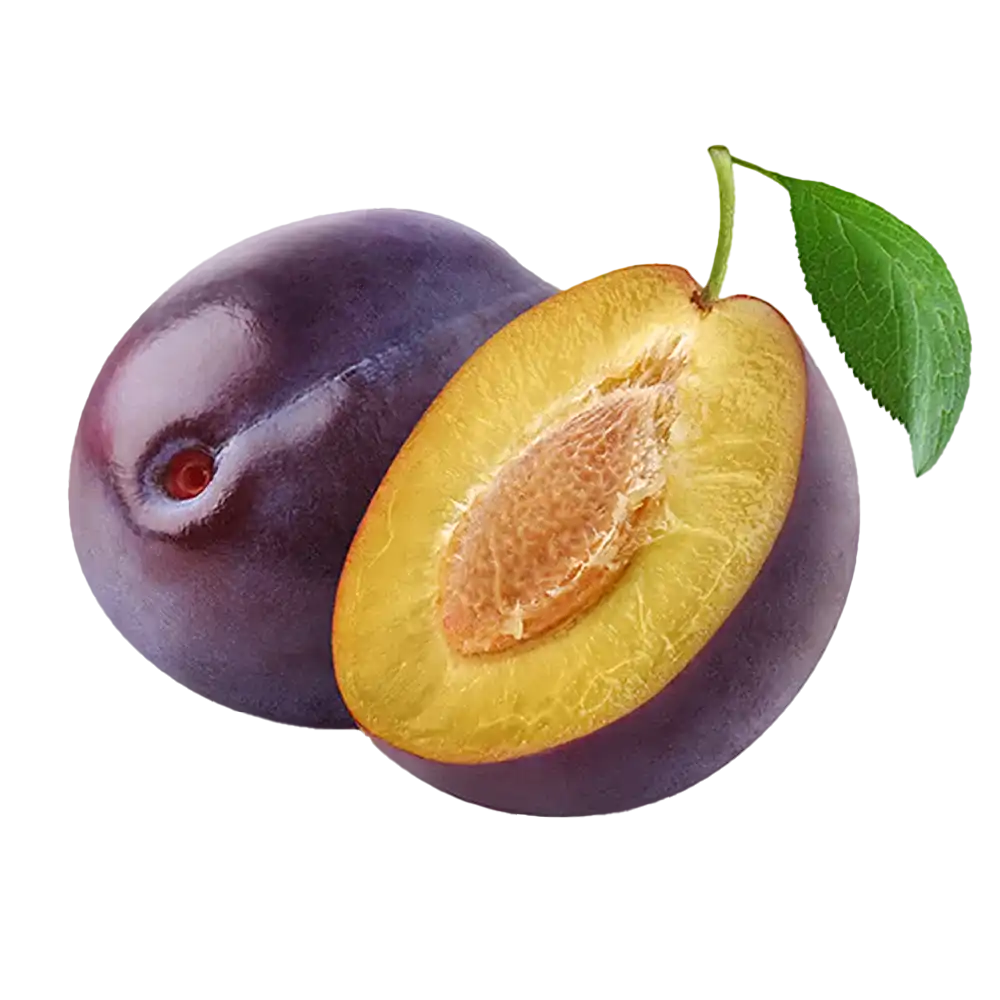
Se spune despre prune că ar fi fost primele fructe domesticite de om, iar originile lor ar fi înrădăcinate în Iran, de unde au fost apoi aduse în Anglia. Nu întâmplător, originea numelui lor fiind asociată cu „ceva bun, irezistibil”.
Există mai multe specii de prune, precum cele Japoneze sau Chinezești (rotunde, de culoare vineție), prune Victoria (mici și roșiatice), prunele verzi Greengage, prune Cherry sau prune galbene, sau Prunele Europene brumării, populare în zona noastră.
Profilul lor nutrițional, bogat în vitamine, minerale, fibre și alți nutrienți face din prune un aliat al stilului de viață sănătos, fie că le consumăm proaspete sau deshidratate (acestea din urmă trebuie consumate cu ceva mai multă moderație, deoarece sunt mult mai dense din punct de vedere caloric).
Valori nutriționale la 100g / Procent DZR
(doza zilnică de referință)*
Energie (kcal):
0
Grăsimi (g/0%):
0
Carbohidrați (g/4%):
0
Proteine (g/1%):
0
Fibre alimentare (g/5%):
0
Zahar (g):
0
Potasiu (mg/3%):
0
Magneziu (mg/2%):
0
Vitamina C (mg/11%):
0
Vitamina K (mg/5%):
0
Scor ORAC**/100 g : 6.259 (Prunele uscate: 8.059)
Top beneficii
Fiind bogate în fibre dietetice, sorbitol și isatin, prunele pot ajuta la reglarea funcției sistemului digestiv și combaterea constipației. De asemenea, datorită conținutului de zahăr relativ scăzut, prunele pot fi consumate în siguranță de către persoanele care se confruntă cu diabetul.
Grație compușilor fenolici (flvonoide) și acizilor poli-antioxidanți precum luteina, criptoxantina și zeaxanthina, regăsite din plin în prune, efectele negative ale radicalilor liberi pot fi ținute mai ușor sub control, prevenind evoluția multor boli și îmbătrânirea prematură. În plus, zeaxanthina oferă protecție antioxidantă pentru piele și filtrează lumina UV.
Prunele sunt bogate în minerale precum potasiu, fluor și fier, acesta din urmă fiind esențial pentru formarea de celule roșii din sânge. Și potasiul este important, deoarece poate menține fluidele din celule la limite normale, ajutând astfel la controlul ritmului cardiac și al tensiunii arteriale.
Știați că…
Prunele sunt al doilea cel mai cultivat fruct la nivel mondial, singurul continent unde nu există culturi de pruni fiind Antarctica.
Citat informație esențială:
Prunele uscate păstrează proprietățile benefice ale fructului proaspăt, dar valoarea lor nutrițională se dublează.
Sfaturile și trucurile noastre:
Păstrează prunele în sertarul frigiderului (2-4 grade), până la două săptămâni.
Consumă două prune pe post de gustare atunci când ai nevoie de mai multă energie.
Adaugă prune tăiate cuburi și o lingură de gem de prune în rețeta clasică de negresă.
Prunele înjumătățite și fripte la grătar completează preparatele din carne.
**Oxygen Radical Absorbance Capacity = Acest indice măsoară capacitatea antioxidantă a fructului. Valorile ridicate presupun o capacitate antioxidantă puternică, ceea ce implică un proces de oxidare scăzut, esențial în protejarea organismului împotriva efectelor negative ale radicalilor liberi.